
Right on Time
The God of the Third Day

Now I would remind you, brothers, of the gospel I preached to you, which you received, in which you stand, and by which you are being saved, if you hold fast to the word I preached to you—unless you believed in vain. For I delivered to you as of first importance what I also received: that Christ died for our sins in accordance with the Scriptures, that he was buried, that he was raised on the third day in accordance with the Scriptures
— 1 Corinthians 15:1-4
This study was planned for the midweek service preceding Resurrection Sunday at our church, but Providence oriented things differently then planned, so we humbly offer it here for your consideration and (prayerfully) for your edification.

While most of our days are consumed in the routine, ordinary, and mundane activities of life—which God has ordained to use for joyful purposes to be sure (Psalm 118:24 and Lamentations 3:22-23 remind us that every day is a special creation of God and that every morning sees new mercies for us)—there are certain days that have greater import than others. Special occasions—birthdays, holidays, anniversaries, reunions—dot our yearly calendar. Appointments and events are marked here and there. Then, as time and the brokenness of the world continue their endless advance, less positive and more sobering dates fill our calendar—a crucial doctor’s visit, the surgery date for our dad, the visitation and memorial for Grandmother.
And one of the greatest frustrations with those important days is the wait between now and then.
Three Days Can Be a Long Time…
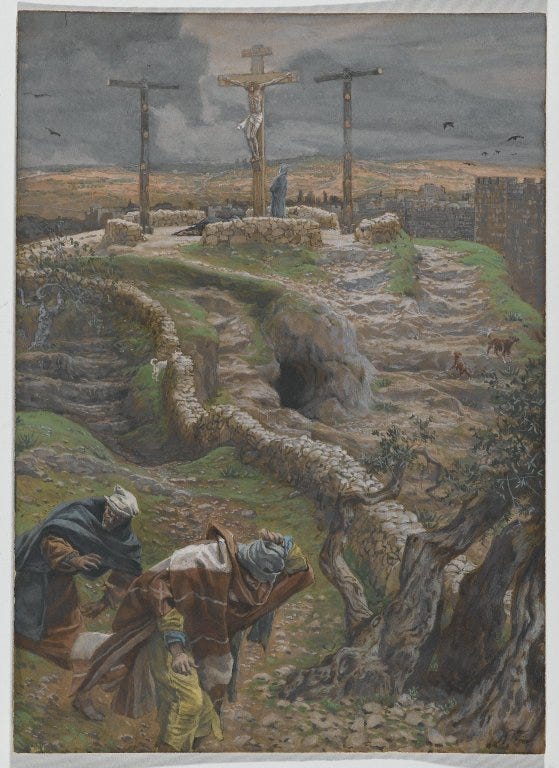
“He took my sins and my sorrows / He made them His very own / He bore the burden to Calv’ry / And suffered and died alone.” — Charles Gabriel, “I Stand Amazed in the Presence of Jesus the Nazarene.” 1905.
The opening words of Dickens’ classic holiday fable, A Christmas Carol, are, “Marley was dead: to begin with.”
For the disciples, their story seemed abruptly and tragically finished with the reality that Jesus was dead. Taken by force from the garden of prayer, brought before multiple rulers of both Gentile and Jewish position, judged in a mock trial, condemned as a criminal while a genuine criminal was set free, lashed well above the required thirty-nine times with the torturous scourge—the whip of nine strands each holding metal, rock, or glass for maximum pain—made to carry the heavy beam of His cross in view of the hateful taunts of the crowd, blood pouring from his body, dishonored and shamed by the Roman soldiers, nailed to the tree, raised up as a curse before the people with His body horribly distended and breath almost impossible to take in, Jesus had cried, “Tetelestai—It is finished,” and finally died. His friends, those to whom He had imparted His kingdom wisdom, who had lived with Him these three years, who had seen the power and the glory of the Lord, abandoned Him and He died alone.
Where were they? What were they thinking? Valid questions, but let me ask another: “Would you have done any different?” Would I have done any different? Reckoning from the many times I have deserted my own post in Christian service, I have to admit that the answer is No.
However, we may point out a crucial piece of information: the disciples had been informed multiple times about this very experience AND they were also given a timeline. At least three times in the Synoptic Gospels and at least four times in the Gospel of John, Jesus spoke concerning His death—in symbolic and literal terms—often adding the specific “three day” term before His resurrection.
“From that time Jesus began to show his disciples that he must go to Jerusalem and suffer many things from the elders and chief priests and scribes, and be killed, and on the third day be raised.”
— Matthew 16:21
Following a powerful encounter with two depressed disciples who were heading home after Christ’s death and who were able to converse with the Lord post-resurrection though they didn’t recognize Him until the last minute, Jesus appeared to His other disciples, and there admonished them how that not only His words about the events were important, but even the Old Testament made all these things clear.
“Then he said to them, ‘These are my words that I spoke to you while I was still with you, that everything written about me in the Law of Moses and the Prophets and the Psalms must be fulfilled.’ Then he opened their minds to understand the Scriptures, and said to them, ‘Thus it is written, that the Christ should suffer and on the third day rise from the dead…’”
— Luke 24:44-46
Stained-Glass Scripture

Like the multicolored refractions of sunlight illuminating a room, the Old Testament contains overwhelming evidence of Christ’s person, work, deity, and glory through both overt references and symbolic portraits. Bible students may call these references “motifs.” For example, there is a Serpent-Slayer Motif, going back to Genesis 3:15 when God promised Satan that the Woman’s Seed would crush him in a devastating blow while Satan would give a non-fatal wound. That Hero-Villain symbolism follows throughout both Old and New Testaments. There is a Wedding Motif, as God ordains the first marriage, covenants Himself as the Bridegroom to His beloved Israel, uses books like Hosea and the Songs to illustrate His love and promises a feast in celebration of His redemption. There is the Kingdom Motif, where a crown of ultimate glory seems to float from head to head throughout the rulers, judges, sovereigns, and conquerors of the Hebrew people, but a crown of thorns on the brow of Christ spells the greatest form of power and authority.
Since there are many symbols and motifs throughout the Old Testament, it is should be no surprise that the consistent references in the New Testament to “the third day” would be yet another lens by which we can behold the glory and honor of the Risen Lord as well as encourage ourselves to the faithfulness of God in doing all things perfectly and purposefully.
“He was raised on the third day according to the scriptures…”
“In the Old Testament we find a pattern of God doing big things on the third day. Redemptive things. Revelatory things. And yes, resurrection things.”—Justin Dillehay1
(1) Genesis 22 - The Blessing of Provision
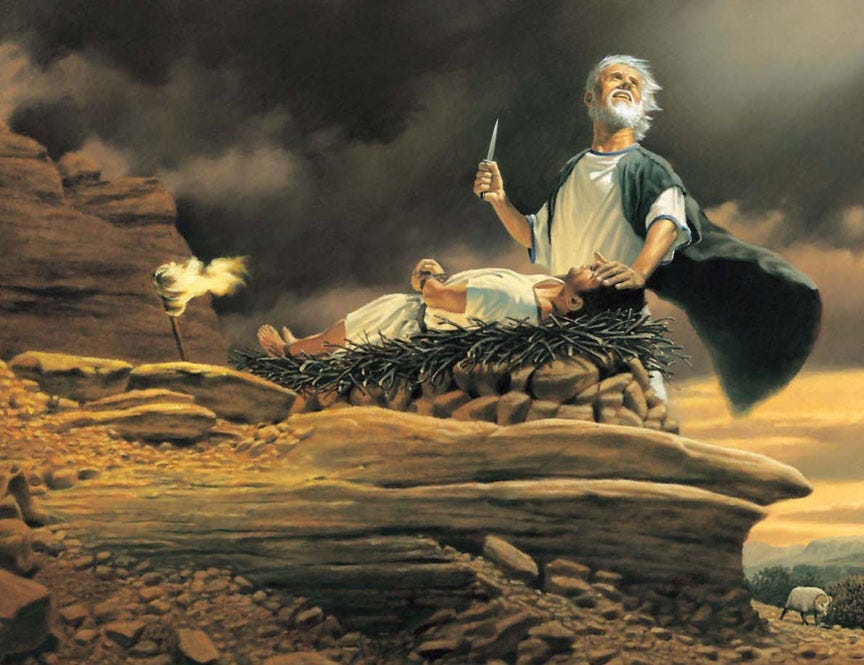
Genesis 22 records one of the most dramatic narratives in Scripture as well as one of the most insightful pictures of what the soteriological basis for Christ’s redemption would be. Propitiation, Atonement, Expiation, Justification, and so on are all so well-defined through the tragedy-turned-celebration we read of the father, Abraham, offering up his beloved, precious, singular son, Isaac, as a sacrifice to glorify the Godhead. The son carried the wood for the burnt offering himself (22:6) as the two traveled to that solemn place where Abraham was fully committed to kill his son as he had killed countless animals in worship to God.
Was this a cruel joke of the Divine played on poor Abraham? Was this a form of cruel and vindictive behavior in the name of religion? No, but this was a test that God administered to reveal the truth about Abraham and the nature of faith, as well as to reveal the truth about Himself and the nature of grace.
The massive contrast between Moriah and Calvary is this—God didn’t provide a substitute for Jesus. The imagery falls short on the point that Abraham was obstructed from carrying out the final act and a ram was taken in Isaac’s stead. God showed Himself as Jehovah-Jireh—the providing God—and merciful to allow Isaac to be freed. Abraham also saw the work of faith exercised within himself, for note his words to the servants that were left at the base of the mountain: “Then Abraham said to his young men, ‘Stay here with the donkey; I and the boy will go over there and worship and come again to you.’’ (22:5). The day Abraham looked up and these promises were solidified was the third day.
The resurrection is an eternal reminder that God has provided Himself a sacrifice. His own dear Son came as “the Lamb of God who takes away the sins of the world” (Jn. 1:29). Christ was always intended to be the Substitute for those who could not atone for their sins. He was laid down upon the altar of holiness, slain as the curse of sin that we committed, but came back down the mountain as the Savior of all who believe.
(2) Exodus 19 - The Blessing of Presence
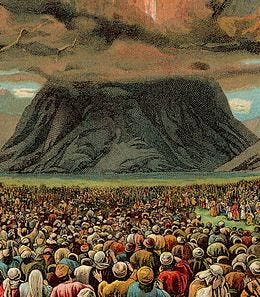
Exodus 19 records one of the most dramatic experiences of God’s presence ever displayed in Bible history. We might call this “Close Encounters of the God Kind,” because Moses—Israel’s leader—would be the mediator between the great and terrible God of perfect holiness and the very sinful, unworthy people of Israel.
In verses 10-11, Jehovah commanded Moses to lead the people in ceremonial cleansing before He would come down on Mt Sinai to visit with them “on the third day.” When He did, the mountain became the scene of what could only be described as righteous atmospheric violence—thick, dark clouds of smoke, thunder and lightning, and the deafening noise of a trumpet one writer described like a massive air raid siren. Everything about the scene—including the deadly cost for human or animals that dared transgress the perimeter—spoke of a fearful judgment and danger for the unconcerned. Moses alone was allowed entry into the sanctum beyond the clouds and received the Law from Israel’s Redeemer and God.
Everyone in the world lives in proximity to one of two mountains—Sinai or Zion. Fearful, unapproachable judgment and walls of fear or grace-filled, liberated, joyous fellowship with the saints and heavenly beings for worship and glory. The difference between those two locales is Jesus Christ. It is He who is both the Perfect Law-giver and Law-Keeper. He is the Law. By His atonement, He has torn down the partition of fear such as Sinai displayed or the mystery that the Temple veil withheld.
The resurrection is the reminder that God dwells with His people—we are His people and He is our God.
“For you have not come to what may be touched, a blazing fire and darkness and gloom and a tempest and the sound of a trumpet and a voice whose words made the hearers beg that no further messages be spoken to them. For they could not endure the order that was given, ‘If even a beast touches the mountain, it shall be stoned.’ Indeed, so terrifying was the sight that Moses said, ‘I tremble with fear.’ But you have come to Mount Zion and to the city of the living God, the heavenly Jerusalem, and to innumerable angels in festal gathering, and to the assembly of the firstborn who are enrolled in heaven, and to God, the judge of all, and to the spirits of the righteous made perfect, and to Jesus, the mediator of a new covenant, and to the sprinkled blood that speaks a better word than the blood of Abel.”
— Hebrews 12:18-24
(3) Esther - The Blessing of Protection
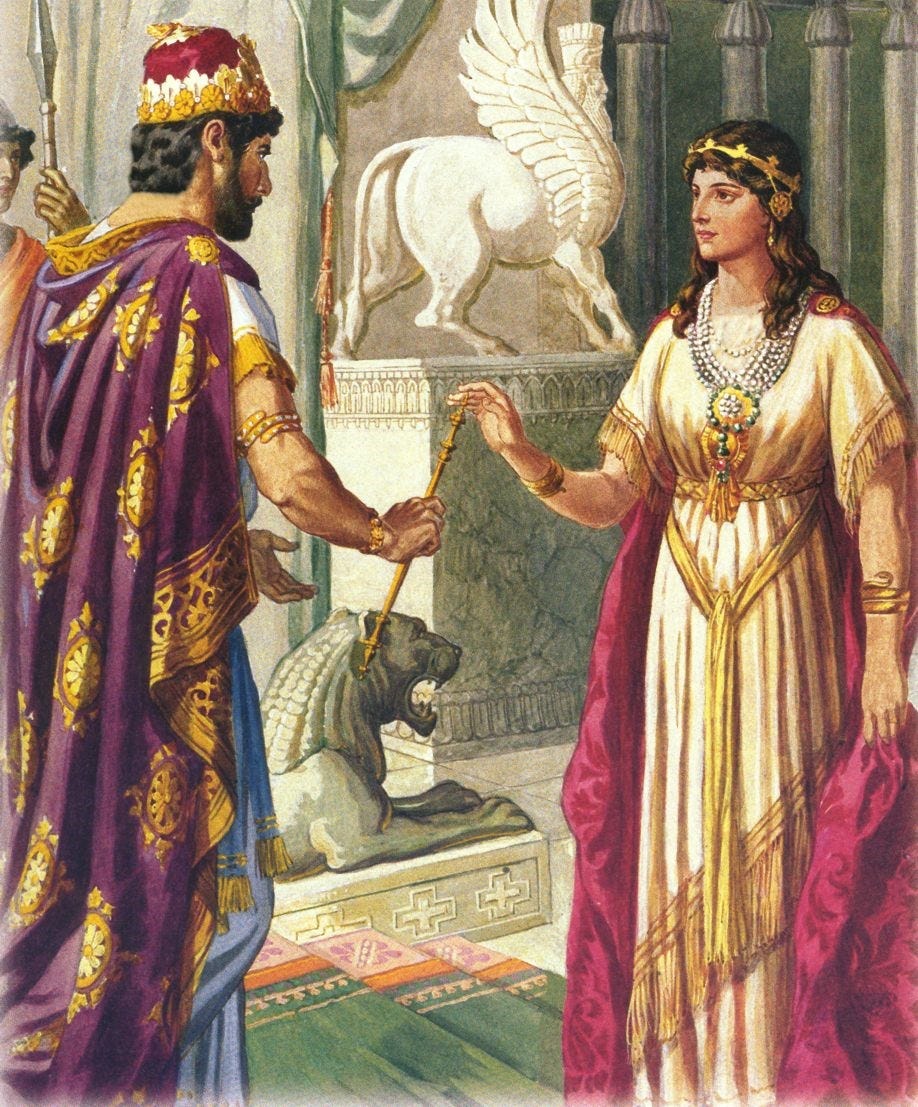
Many commentators, teachers, and students love to remind us that Esther is the only book in the Bible that doesn’t name God anywhere in the story. But if you don’t see God, you aren’t looking for Him! Like every thread of our lives making up the tapestry of existence, He is personally attached to every atom and fiber.
The book of Esther is an encouraging example of God’s sovereign control over the circumstances of every level of life—from the small details up to the monumental movements of rulers and kingdoms.
The narrative contains the classic hero/villain story arc. God is the true hero, working things to His will from His throne in Heaven. Esther became a heroine, being the agent of redemption from her position as the new queen of Susa, the new wife of Ahasuerus after Queen Vashti was deposed. The villain is an anti-Christ figure named Haman, who viciously hated the Jews, and sought their eradication. From her exalted seat, Esther was poised to protect the people and alongside her cousin, Mordecai, they watched Haman destroyed and God’s mercy preserve His chosen people.
After a 72-hour fast, on “the third day,” Esther dressed herself and stood in the court of Ahasuerus where he bestowed his blessing on her, making her the most powerful woman in the kingdom. In Jewish tradition, many fasts were called that would last for three days, giving a time for intense prayer and devotion in often crisis situations.
In the resurrection, we are reminded that while Christ was in the darkness for three days, He arose the most powerful Ruler in the universe. His power and authority is of such immensity that He can and will protect His people from the schemes of the enemy.
(4) Hosea and Ezekiel - The Blessing of Purpose
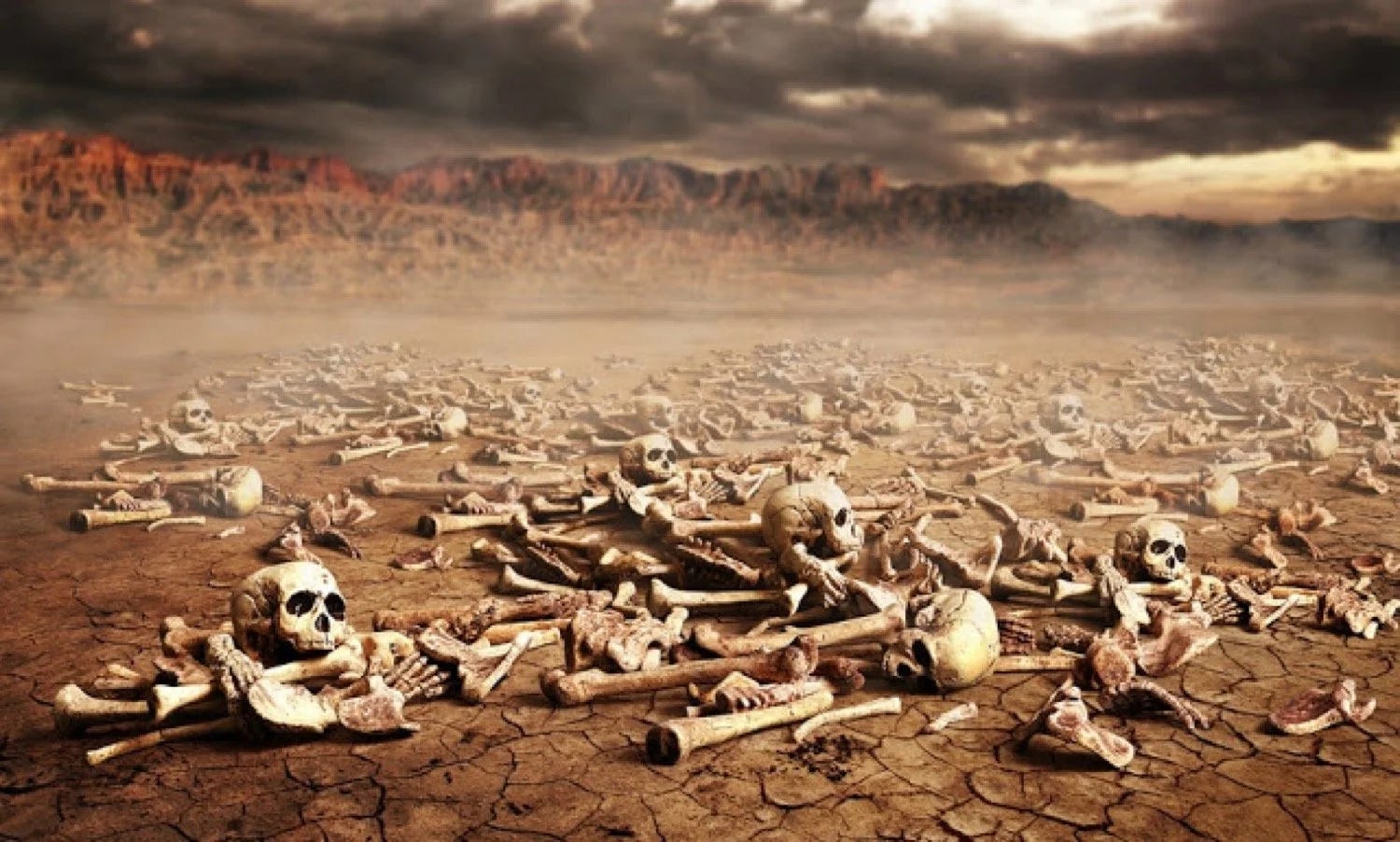
The renewal of Israel after their exiles and bondage could be considered something like resurrections. Ezekiel 37 describes the condition of Israel in Babylonian captivity like a valley of scattered, dry, useless bones. But, as the prophet saw, God would breathe onto that pitiful place and raise up a mighty army out of the dust.
Hosea was a contemporary of Ezekiel, and here is how he described the renewal of God:
“Come, let us return to the LORD; for he has torn us, that he may heal us; he has struck us down, and he will bind us up. After two days he will revive us; on the third day he will raise us up, that we may live before him.”
— Hosea 6:1-2
There it is again—two days of ongoing work and a third day victory. The scattered will be unified; the dry and dusty will be refreshed; the dead will be raised; the powerless will receive strength.
The resurrection should remind us that God has not given up on His plan in our lives. Where there has been brokenness and darkness, He will bring the Light of life.
Jonah - The Blessing of Proclamation
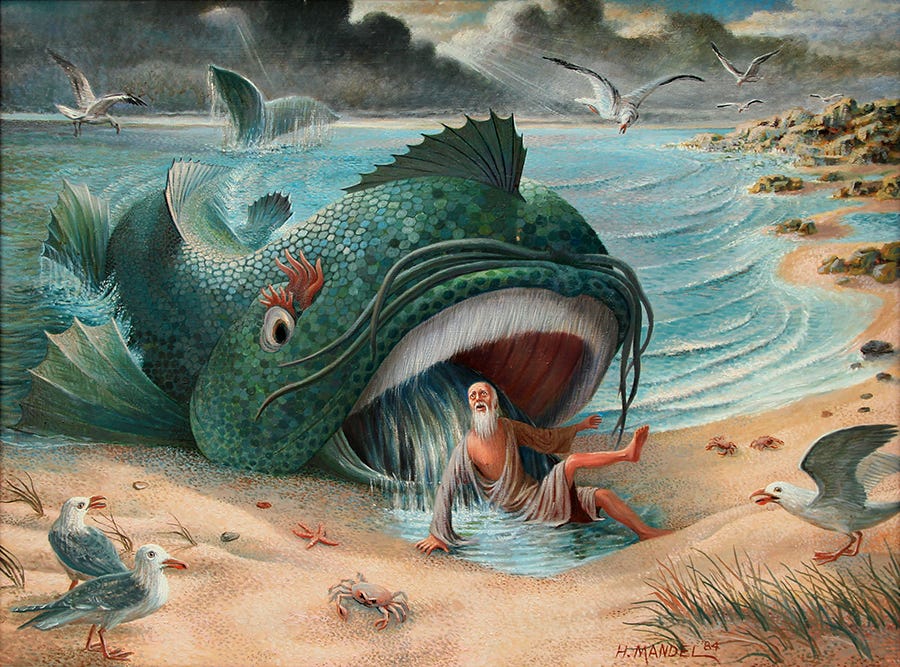
In one of the most overt passages about His death, burial and resurrection, Jesus says,
“But he answered them, ‘An evil and adulterous generation seeks for a sign, but no sign will be given to it except the sign of the prophet Jonah. For just as Jonah was three days and three nights in the belly of the great fish, so will the Son of Man be three days and three nights in the heart of the earth. The men of Nineveh will rise up at the judgment with this generation and condemn it, for they repented at the preaching of Jonah, and behold, something greater than Jonah is here.’”
— Matthew 12:39-41
When Jonah flung himself from the boat he had boarded to go to Joppa in rebellion, a large sea beast swallowed him up and he was in the beast’s belly for three days and three nights (Jonah 1:17). Jonah didn’t see the “Uber” sign on top of the fish’s head, but the creature’s mission was to deliver Jonah to Nineveh, where he should have been in the first place, preaching repentance as he had been commanded.
Jonah described his experience as being “in the belly of Sheol,” the Hebrew word for the grave (Jonah 2:2). To quote Dillehay, “Don’t get hung up on the fact that there weren’t three days and three nights between death and resurrection.” The way the Jews counted days would be inclusive enough that Christ’s experience would be accepted. The similarity in experiences is clearly prophetic—Jonah was in the depths of the “grave” for three days; Jesus was in a literal grave for three days.
“I called out to the LORD, out of my distress, and he answered me; out of the belly of Sheol I cried, and you heard my voice…Then I said, ‘I am driven away from your sight; yet I shall again look upon your holy temple…To the roots of the mountains I went down, to the land whose bars closed upon me forever. Yet you brought up my life from the pit, O LORD my God…But I with the voice of thanksgiving will sacrifice to you; what I have vowed I will pay. Salvation belongs to the LORD!‘“
—Jonah 2:2, 4, 6, 9
Jesus offered himself as that sacrifice of praise. He became the Prophet of truth to the unbelieving nations by way of His miraculous return from the depths of darkness. The reality of Jonah’s “resurrection” was and will be a signal of judgment on those who don’t believe.
The resurrection is the universal exclamation point of all the promises of God’s mercy on a sinful people. Jesus is the Way, the Truth, and the Life for those who are disoriented by sin, deceived by sin, and dead in their sin. Because the Savior lives, there is hope of repentance and salvation.
Matters of First Importance
The Gospel is top-tier, preeminent, all-important truth. That’s why the Apostle Paul said that these facts were the foremost things he had declared to the Corinthians as their foundation and hope.
Included in this is the reality that Jesus rose on the third day according to the scriptures, and it is probable that Paul was thinking of the scriptures we have referenced and others.
Today is Friday, but Sunday is coming. You can encourage your own soul and the souls of your loved ones by reminding yourself that—despite the wait you are in—there some rock solid facts about our “on-time” Savior…
He is the Sacrifice offered in our place
He is the Mediator of our close and joyful relationship with God
He is the Protector of His people
He is the Redeemer of those in exile
He is the Gospel pronouncement to the rebellious people
Have a fantastic Resurrection Sunday!
Blessings.
SDG
Dillehay, Justin. “How the Old Testament Prepares Us for the Third Day.” April 20, 2019. The Gospel Coalition
Great article, brother.