
Ministerial Malpractice - Part 2
First, Do No Harm


In Tuesday’s blog describing the medical malfunction that was Dr. Doctor Bliss’ mishandling of President James Garfield’s shooting and attempts to save him (which you can read here), we used the strange historical record to lay a basis for our argument that pastors are “soul physicians” and should consider their work accordingly, exercising caution against what we’re calling ministry malpractice.
The Hippocratic Oath is a code of ethics held by doctors based on the oldest Greek medical text we know of, written by a physician named Hippocrates. Among other principles, Hippocrates counseled the famous maxim: “First, do no harm.”
Martin Luther, whose pastoral care was one of his highest priorities despite the world of responsibility he carried as the face of the German Reformation, said this about the sufficiency of the Word in the treatment of souls:
“Accordingly a [medical] physician is our Lord God’s mender of the body, as we theologians are his healers of the spirit; we are to restore what the devil has damaged. So a physician administers theriaca (an antidote for poison) when Satan gives poison. Healing comes from the application of nature to the creature . . . . It’s our Lord God who created all things, and they are good.”1
In the duty of administering theological theriaca, far too many professing pastors are actually creating further maladies by negligence, incompetence and/or voluntary mishandling of the flocks over which they serve. There are present and eschatological consequences for these issues that should cause those in ministry to tremble.
May we heed and internalize the caution of James:
Not many of you should become teachers, my brothers, for you know that we who teach will be judged with greater strictness. For we all stumble in many ways. And if anyone does not stumble in what he says, he is a perfect man, able also to bridle his whole body.
— James 3:1-2
Here are a smattering of dangers I would submit in our analogy from Bliss and Garfield:
# 1 - Beware of the ego that craves opportunities to be elevated in ministry
“Pride goes before destruction, and a haughty spirit before a fall.”
— Proverbs 16:18
Pride is like a heat-seeking missile. It magnetizes itself in us towards any opportunities that exist for us to look/feel better—but with only disastrous results. Church ministry, unfortunately, is like the porch-light of the world, drawing in masses of moth-like personalities who see a ministerial position as the perfect platform to elevate themselves—often lacking or confused in regards to the maturity, integrity, accountability, and sensibility that true ministry deserves.
When Bliss got wind of Garfield’s attack, of the bullet wound (ballistics was a field in which he considered himself an authority), and of his opportunity to be out front as the leading medical figure in this high-profile case, he seized on the circumstances—not as a caring influence but as a scavenging presence. Instead of offering his services to help the President—uniting himself with other knowledgeable people, and taking the most sensible courses of action and possibly saving the President’s life and helping maintain what was shaping to be an honorable presidency—he kept Bliss first. He used Garfield. And, as many modern experts have opined, it could have been likely that Garfield would have lived if only Bliss had actually left him alone to heal naturally.
Dr. D. Martyn Lloyd-Jones (1899-1981)—a bona fide medical physician who had studied and trained alongside some of the brightest British doctors of his time and who left the profession for pastoral ministry—was a tremendous example of a “soul physician.” In his great book Preaching and Preachers—which I recommend for every preacher to read and reread—he said:
“The man who is called to preach is called to the most searching test of his whole personality.”
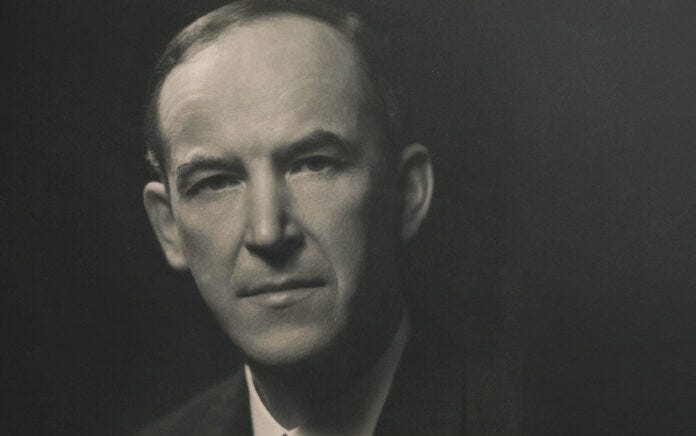
And many personalities do not hold up to the scrutiny.
There are a range of aberrant personalities that seek out positions of leadership in churches, but we could condense them into three categories, alongside the specific enticements ministry seems to offer them:
The insecure who desire validation and can find meaning in religious service
The domineering who can have authority and respect without accountability
The discouraged who have failed elsewhere but can use ministry to gain affirmation without measurable outcomes
In this way, there are similarities between Dr Bliss and Mr Guiteau in our analogy of certain professing preachers’ experiences—both were opportunists who convinced themselves and others of their great mission of mercy. Both were living pretty far of the reservation as well, if you catch my drift. Pastors can be looked on as heroes, but it is crucial that the pastor himself never buys into the hype but stays as lowkey and humble as possible. Ministerial insanity begins when the pulpit becomes a personal platform for our “brands,” not a launching ground for the glory of Jesus.
While the pulpit doesn’t create instability or indignity in people, it most certainly exposes these qualities. As has so often been the case across locations and denominations, scandals of negligence, mismanagement, emotional distress, and all forms of abuse have plagued churches and left chaos in their wake. Much of this is simply a result of a rogue element in church leadership left without biblical guidance or who have been given too much power or influence to be curtailed.
Churches are not stair steps to greater glory. Pulpits are not shields for instability or insecurity. If you failed as a salesman, businessman, influencer, coach, etc., ministry is not the next project for your brand.
This is an issue worthy of much greater consideration and attention to be sure.
# 2 - Beware of confidence in your own abilities/knowledge/experience
Someone who cannot be taught cannot be trusted.
Read that again.
When Dr. Bliss began his work, he did so with complete and total certainty of himself. Now, anyone who is doing something as important as treating the ill or ministering to the wayward, there is a need for assurance but never in ourselves.
The minister has the unique temptation to conceive his preaching, counseling, prayer meetings, and other duties completely void of any meaningful study of God’s Word or dependence on the Holy Spirit…and that ministry can look outwardly impressive. That should terrify anyone who is involved in Church work.
Instead of preaching the Bible in the format in which it was inspired—with focus on the systematic and exegetical nature of verses in their context—many pastors pick and choose topics that play to their interests or strengths instead of relying on the inspired truth to do what only it can through the power of the Spirit of God who originally inspired it. And they do so operating without the Spirit since “trail mix sermons” and self-assured preachers go together like fire and gas.
Yet, when we do trust the arm of flesh, when we prop ourselves up with our ideas of sufficiency, we are simply parading around like the foolish ruler in Hans Christian Andersen’s fable The Emperor’s New Clothes—shamefully naked while convinced we are wearing the finest duds.
Don’t be like Sardis, that had “the reputation of being alive, but [were] dead.” (Rev. 3:1)
Brothers, these things must not be.
# 3 - Beware of isolating yourself from the help and accountability of others.
Not only did Dr. Bliss consider himself the most qualified authority for Garfield’s medical treatment, he went out of his way to distance others who may have challenged that authority, but who would have been invaluable help. These included the personal physicians and friends of Garfield, those who would have known more about his health and the specifics of his condition. Had Bliss shown the slightest interest in real doctoring, he would have welcomed the experience, service, and attention of other doctors than his own cronies, and things would have likely gone far better. At the very least, Bliss’ reputation might have fared better in popular imagination since he would not have been the sole candidate for blame, but would have shared the work and the legacy with others.
Preachers who think themselves Mavericks with no need for help are steps away from scandal everywhere they go—they just don’t know it. Pastoral leadership is a minefield; it requires diligence and shared responsibility. Both as a means of productiveness and protection, a minister should surround himself with trusted advisors—elders, deacons, or some form of administrative support—to shore up his deficiencies and to preserve him from being the only person holding the bag if decisions or actions go awry. A pastor-led model for a church is not necessarily wrong, but a pastor-run model is a far cry from the NT example where the shepherds were aided and supported by deacons and helpers from within the body.
“It’s both foolhardy and dangerous to embark on pastoral work all by yourself. That is why Jesus sent his disciples out two by two, and that’s why all the mission imperatives in the New Testament are in the plural. We are not solo entrepreneurs in this business, and it’s not a business. It is rather a ministry that finds its source and goal in the eternal ministry of the Holy Trinity.”2
# 4 - Beware of inflating your ministry accomplishments or deceiving others in how you handle ministry
The “halo effect” is a social bias seen when people perceive other people, leaders, companies, brands, etc. based on favorable traits or expectations, using these singular attributes as justifications for ignoring problems or shortcomings. For instance, if you perceive someone as handsome or beautiful, you may also infer that they are kind or noble, or forget that they are actually foul human beings Think Prince Charming from Shrek 2.

Pastors who exaggerate, inflate, and practically deceive others about personal and ministerial records are abusing their position to look better than they are, expecting everyone to gloss over their faults while being enamored with their abilities, presence, or just the honor of their office. These are among the worst kind of hirelings.
If you have appearance and status at the forefront of your ministry focus, you doubtless will have to defend and uphold your position by whatever means necessary, but our glory is not even in the same universe as the real glory for which we should strive..
Two common errors exist in conjunction with this area of ministerial temptation:
Diverting bad behavior under the “M.O.G. Rule”. When David tore the fabric from Saul’s robe as Saul relieved himself out near the caves of En Gedi where David was hiding, we read that he was convicted of this act by God, since he was not supposed to “touch the head of God’s anointed.” (See 1 Samuel 24) And how many ministerial messes have been concealed under the eisegetical nightmare that has been the out-of-context takes on this verse! (Insert angry Sproul meme here. “You can’t question him—he’s the Man of God. He’s the anointed one,” says the butchered Bible believer. This ideology has been misused as an insulator of criticism or confrontation. The error elevates preachers as something “other” than the normal people who make up Christ’s Church—superior and more important servants. In Christ, we are all God’s “anointed,” and we preachers had better learn humility lest we are humiliated.
Exaggerating numbers or activities to impress others. This is an issue attached to various Christian practices over the years such as the hyper-evangelistic, soul-winning campaigns of the 1940s to the 1970s, the evangelism explosion of the 1980s and 1990s, and the system of counting converts and baptisms still active in even solid churches today. Such misguided thinking and practice is based more on the human desire to lean on personal achievement and not Gospel faithfulness. We should rejoice in the work of God but remember: it is the work of God, not of our skill, acumen, pragmatism, or performance.
# 5 - Beware of dangerous practices that could cause infections
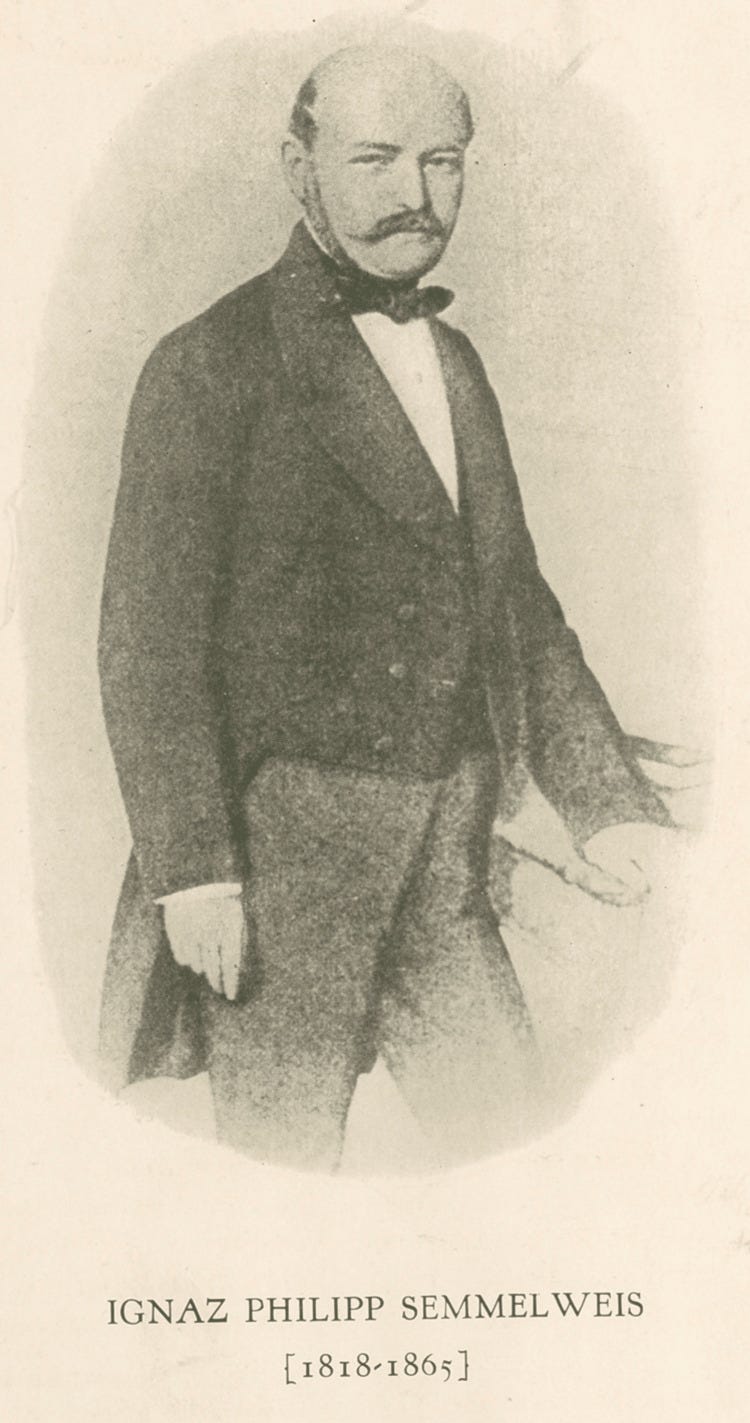
Dr. Ignaz Semmelweis (a 19th century Hungarian physician whose name unfortunately sounds like a Seussian character), was the unsung pioneer of antiseptic control in hospitals and medical treatment facilities. Working in a maternity ward in a Viennese hospital in the 1850s, Semmelweis deduced that the mortality rates of babies, mothers, and even some of the staff was directly related to the lack of sterilization and hand washing amongst doctors. It was normal in those days for a hospitalist to perform an autopsy, examine an infectious patient, eat their lunch, and delivery a baby all without washing their hands in between.
Semmelweis published his findings and began practicing rudimentary procedures to wash his hands and instruments (which summarily improved conditions in his area), but was essentially laughed into obscurity by his peers. It would be another century or so until his assertions were proven correct and his legacy vindicated.
If a surgeon entered the OR of a hospital today without washing and dressing himself accordingly, he would be disallowed from his procedure. Imagine he did get in, but used his ungloved, unwashed fingers to start fiddling around in an open wound or in an incision. First off, EEEEEYUCK!
Since the assassination attempt and ensuing attempts to save Garfield took place in an era where men like Dr. Semmelweis and Dr. Joseph Lister were ignored by competent physicians about the need for hygienic procedures in medical work, he unfortunately was beholden to a doctor who was among the detractors and who consistently touched, probed, and cross-contaminated Garfield’s sick bed, causing clots and abscesses throughout the President’s body.
Hygiene is defined as “the science of the preservation of health.”3 There is a “hygiene” (system of wellness) in the spiritual life that pastors and elders should consider as high priority in their administrations to the flock of God. The pastor should himself have this healthiness and then encourage healthiness in their congregants’ souls.
Two statements/charges from Paul to two pastors under his tutelage, Timothy and Titus, are instructive in reminding the pastor-physician of his responsibility to maintain a healthy doctrinal and spiritual balance.
To Titus, Paul says, “Your mission is rehab.”
This is why I left you in Crete, so that you might put what remained into order, and appoint elders in every town as I directed you
— Titus 1:5
Crete was an area of scattered island communities whose Christian influence was plagued by abscess-like attitudes of selfishness and disunity. The word for “order” shares a root with our word orthopedics or orthotic, so there is a connection to the treatment and setting of bones. Our spiritual structure is strengthened by the ministry of the Word, which is of upmost significance for our pastoral work.
To Timothy, Paul says, “Your mindset should be consistency.”
“…if I delay, you may know how one ought to behave in the household of God, which is the church of the living God, a pillar and buttress of the truth.”
— 1 Timothy 3:15
I am no exercise-addict. I do not derive pleasure from a run. My endorphins must be broken because a workout has never left me feeling nearly as good as a cheeseburger. I digress…
The power of healthy habits is in consistency—not perfection—but a progressive approach and repetition that makes good activities a natural part of your life.
Paul reminds Timothy what every member of the Church should know: there’s a standard or form of behavior that comes with the mission and movement of the Church. It is not a legalistic or antinomian approach; it is a biblical and reverential pattern that is consistent with this testimony—the Church is the supporter and defender of Truth. One of the ancient Ephesians’ greatest social achievements was the construction of the Temple of Artemis, a massive stone building with a multi-ton roof supported by gigantic pillars. Like those pillars upholding the glorious imagery and protection of this false deity, we should be preserving and presenting the truths of Christ with our words but also with our consistency as Christian servants.
Woe to the spiritual leader who sees the infected and ignores their maladies but even greater woe for the spiritual leader who facilitates or creates those infectious soul diseases!
Keep a close watch on yourself and on the teaching. Persist in this, for by so doing you will save both yourself and your hearers.
— 1 Timothy 4:16
# 8 - Beware of “grace-gouging”
Imagine you are a wealthy businessman dealing in metals and scrap, circa 1925 New York City. An exotic, smooth-talking man comes in your office saying he is a French dignitary and gives you a long spiel about how the Eiffel Tower—a French goodwill gift to the U.S. that has become a symbol of American liberty—is under the knife by the city because it is taking too much space. Are you interested in buying it?
Sounds like Grade-A malarkey…and it was. Yet, the scheme duped not one but two people and netted the conman a hefty sum of money. The perpetrator was named Victor Lustig, a Hungarian immigrant in America who became a high-profile criminal until he was finally apprehended and imprisoned in Alcatraz where he died in 1947.
Should churches support those who plow the fields and plant the seeds of ministry around them? Absolutely. The Scripture is clear that those who lead in the Church are worthy of “double honor” and to neglect their needs is to “bridle the ox.” (See 1 Tim. 5:17-18). Those God raises up for the purpose of serving the Church are to be recipients of the charitable and cheerful support and encouragement of their flock.
But what about the leader neglecting and/or abusing the church for his gain? What about a preacher falsely imposing an image of himself or promise of actions upon a congregation that he never intends to keep? There are definitely swindlers in pulpits, but the secret supplanting of which I speak can be charged to any number of small or obscure preachers who wish to be propped up and prosperous when they (a) are not fit for ministry in the first place, (b) disqualified by personal/moral conduct, and/or (c) motivated by financial gain as their highest focus.
The Church is not the personal loan company for a lazy man or woman who sees ministry as an easy paycheck. She is the Bride of Christ, worthy of our time, love, respect, and intentionality.
If you are a pastor or church leader and these articles have confronted you in the areas of unfaithfulness or forgetfulness, none of us can say, “Ignorance is bliss.” We need to be alert and stay close to the Lord!
Blessings,
SDG!
Preserved Smith. The Life and Letters of Martin Luther. Murray: London. 1911. 492.
Harold Senkbeil. The Care of Souls: Cultivating a Pastor’a Heart. Lexham Press. 2017. xvii
Dictionary.com. “Hygiene”